Independent researcher and consultant
Food Systems Finance — climate change, industrial animal agriculture and finance
Interdisciplinary researcher · Author · Consultant
Dr Divya Narain researches Food Systems Finance: the capital behind industrial animal agriculture, and its consequences for the climate.
Research featured in
Profile
Divya Narain's research asks who funds industrial animal agriculture, what it costs the climate, and how that capital can be redirected. In 2024 she won a Burning Questions Fellowship from the Tiny Beam Fund to study the greenhouse gas lock-in created by development bank financing of industrial livestock in low-income countries. She has provided research support to the Stop Financing Factory Farming coalition.
She holds a PhD from the University of Queensland and a Master’s from the University of Oxford, where she completed a postdoctoral fellowship in 2024. Her research has been published in Nature Sustainability, Science, One Earth and Conservation Biology, covered by The Independent, Forbes, The Banker and The Conversation, and she was a Lead Author of the IPBES Business and Biodiversity Assessment.
View LinkedIn profileJourney
Food Systems Finance — climate change, industrial animal agriculture and finance
Development bank financing of industrial livestock and greenhouse gas lock-in in low-income countries
Catalysing nature finance — how public and development finance can mobilise private capital for nature
Biodiversity Risks and Safeguards of Global Infrastructure Finance: The Case of China's Belt and Road Initiative
Sustainability consultancy, Mumbai
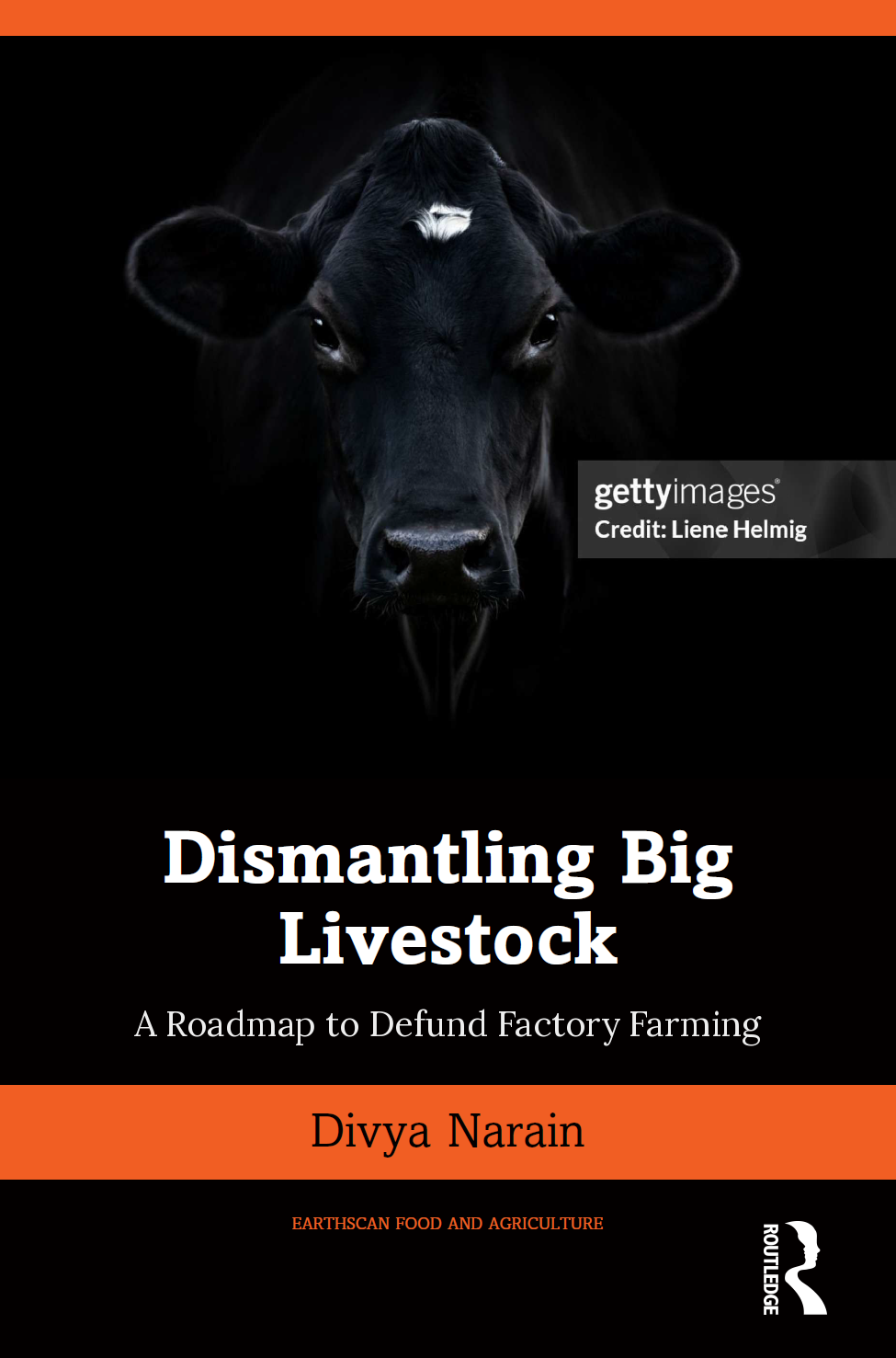
Book
A Roadmap for Defunding Factory Farming
Ten companies dominate the emissions of industrial animal agriculture. This book maps the finance that sustains them — shareholders, lenders, subsidies and development banks — and sets out how that capital can be withdrawn.
Visit the book websiteFellowships, grants and affiliations
Climate Course Correction: how development banks lock low-income countries into industrial livestock, and what civil society can do about it.
The UN-backed body often called “the IPCC for nature”. Chapter 5, on business and biodiversity.
Research for the coalition’s campaign on the IFC’s livestock financing: the Unsustainable Investment series.
Research project on climate obstruction by the finance sector: how asset managers vote on climate resolutions at Big Livestock companies.
Connect